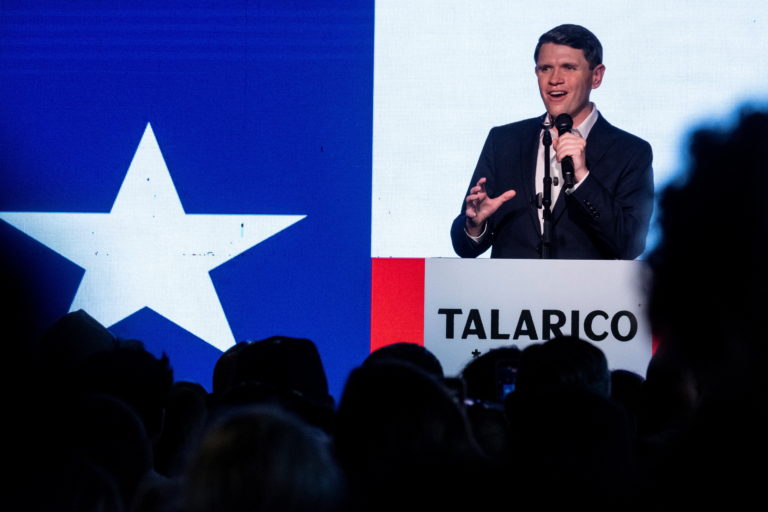

Talarico drew a causal line from high prices to corruption — billionaires seeding politics with gobs of money — and used it to attack Paxton’s reliance on megadonors. Meanwhile relentless television ads flashed headlines from a federal corruption investigation into Paxton after his aides reported him to the FBI in 2020, although prosecutors ultimately decided to not bring charges.
It was still an uphill climb. Democratic candidates in past years, most notably Beto O’Rourke’s 2018 campaign against Sen. Ted Cruz, have ignited enthusiasm that was swiftly doused on election night. Texas last sent a Democrat to the Senate when Lloyd Bentsen was reelected in 1988 — the year before Talarico was born.
Paxton’s durability faded in a heated race
Paxton’s defeat shatters a decade of political resilience in the face of legal and personal troubles, including a 2015 indictment on securities fraud charges and a divorce filing last year by his wife, state Sen. Angela Paxton, on “biblical grounds” over accusations of adultery.
That durability withered in the biggest race of his career. Paxton, who avoided debating Talarico, staked his candidacy on painting his opponent as a liberal extremist while framing the race as a battle for the direction of the nation.
He unleashed a tidal wave of attacks highlighting statements Talarico made as a legislator for his liberal Austin district, including calling God “nonbinary” and saying there were six genders. Talarico now says he considers those comments “cringey.”
But Paxton struggled to unify Republicans after the primary against Cornyn. Trump campaigned in Texas in a final stretch bid to drive GOP turnout, but facing deep unpopularity across much of the country, his efforts fell short.
It was a very pricey campaign
The race was one of the most expensive in the country, as both sides blanketed the airwaves with more than a half-billion dollars in combined campaign ads, according to AdImpact.
Most of that was aimed at boosting Paxton in the nation’s second-most populous state, home to 31 million residents and for years a conservative counterweight to California’s liberal influence.
Musk contributed a total of $158 million to the Senate Leadership Fund, the same amount that the fund then gave to Texas PAC, the largest contributor to Paxton’s campaign. Musk also gave $10 million to the Paxton-supporting Lone Star Liberty PAC.
Talarico argued that the inflated spending blitz made clear the urgent need for checks on powerful interests, saying often on the campaign trail: “Texas is not for sale.”